Best Physiotherapy for Stroke Patients in Ambala: A Complete Recovery Guide
 by
by 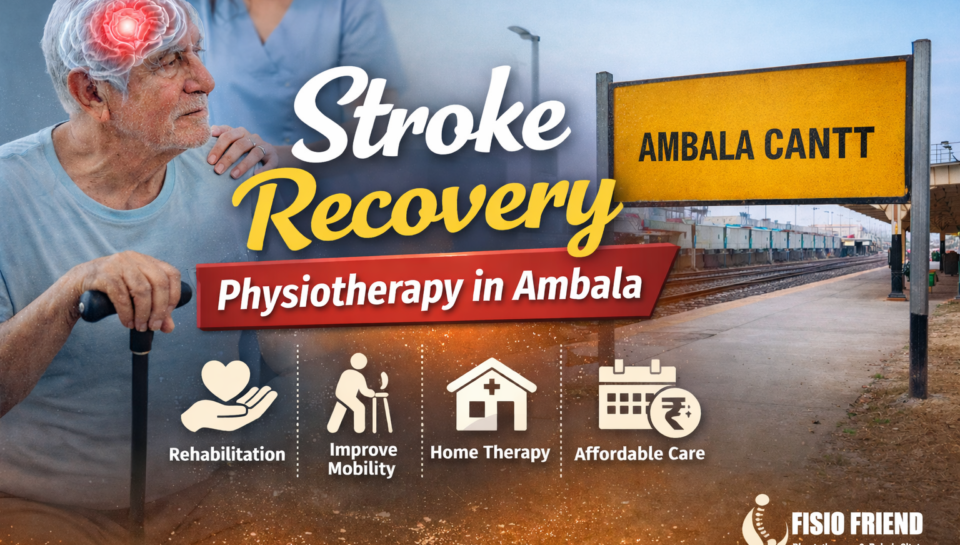
When a stroke hits, life changes in a split second. We’ve seen it many times at our clinic—one moment everything is fine, and the next, a family is struggling to understand why their loved one can’t move their arm or speak clearly.
If you are reading this, you are likely looking for answers for a parent, a spouse, or perhaps yourself. You might be feeling overwhelmed by the medical terms and the sudden shift in your daily life. Please take a deep breath. While a stroke is a major event, the brain has an incredible ability to rewire itself.
In this guide, we will walk you through how physiotherapy for stroke in Ambala can help you reclaim independence and what a realistic journey to recovery looks like.
What is a Stroke? (Keeping it Simple)
Think of your brain as the “control center” of your body. To work properly, it needs a constant supply of blood (which carries oxygen). A stroke happens when that blood supply is interrupted.
- It could be a blockage (like a pipe getting clogged).
- It could be a bleed (like a pipe bursting).
When blood stops flowing to a part of the brain, the cells there get “sleepy” or damaged. Since that part of the brain controls a specific body part—like your right leg or your speech—those functions stop working. Recovery is essentially the process of teaching the brain how to send those signals again.
Why Physiotherapy is the “Secret Sauce” to Recovery
Many people think medicine alone will fix a stroke. While doctors stabilize the patient, the real work of “relearning” happens through movement. This is where neuro physiotherapy in Ambala becomes essential.
The brain possesses a feature called Neuroplasticity. This is a fancy way of saying the brain is flexible. If one pathway is damaged, physiotherapy helps create “detours” or new pathways to get the message from the brain to the muscles. Without consistent movement, muscles become stiff (spasticity), and the brain “forgets” how to use the limb entirely.
How Physiotherapy Actually Helps
Physiotherapy isn’t just about “doing exercises.” It is a structured plan to regain life. Here is how we help patients at Fisio Friend:
- Regaining Balance: Many stroke survivors feel like they are “leaning” to one side. We work on core strength so you can sit and stand without falling.
- Breaking Stiffness: After a stroke, muscles often become tight and painful. We use manual therapy to keep joints flexible.
- Coordination: We help the brain and hand talk to each other again so you can perform tasks like holding a spoon or buttoning a shirt.
- Walking (Gait Training): We focus on getting you back on your feet safely, moving from a walker to a stick, and eventually to independent walking.
Practical Exercises You Can Do at Home
While you should always work with the best physiotherapist in Ambala for a personalized plan, here are a few simple movements often used in early recovery:
- Bridging: Lying on the back with knees bent, lifting the hips off the bed. This builds the strength needed to stand up.
- Wrist Extensions: Using the “good” hand to gently stretch the affected hand upward.
- Sitting Marching: While sitting in a sturdy chair, slowly lifting one knee at a time as if marching.
- Grip Practice: Using a soft foam ball to practice squeezing and releasing.
Note: Never force a movement that causes sharp pain. Always consult your therapist first.
The Recovery Timeline: What to Expect
Recovery is a marathon, not a sprint. Every patient is different, but here is a general roadmap:
- The First 3 Months: This is the “Golden Period.” The brain is most receptive to changes now. This is when we see the fastest progress.
- 6 Months to 1 Year: Progress might feel slower, but this is where “fine-tuning” happens—better walking balance and improved hand usage.
- Long-Term: Recovery doesn’t stop at one year. We have seen patients in Ambala continue to make gains 2 or 3 years later through consistent effort.
When Should You Start?
The answer is: As soon as the doctor says the patient is stable. In fact, “bedside physiotherapy” often starts in the hospital within 24 to 48 hours. The earlier you start stroke rehabilitation in Ambala, the lower the chances of permanent muscle shortening or “frozen” joints. Waiting weeks “for the patient to get stronger” is actually counterproductive. Movement is what makes them stronger.
Why Choose a Neuro Physiotherapy Clinic in Ambala?
General physiotherapy (like for back pain or sports injuries) is different from neuro physiotherapy. A stroke survivor needs someone who understands the nervous system.
Ambala has become a hub for quality healthcare, and choosing a local clinic means:
- Consistency: You don’t have to travel long distances, which is exhausting for a stroke patient.
- Family Involvement: It’s easier for family members to attend sessions and learn how to help at home.
- Local Support: You are treated by people who understand the local lifestyle and environment.
Why Fisio Friend is Your Partner in Recovery
At Fisio Friend, we don’t just see a “patient”—we see a person who wants to get back to their family, their job, and their hobbies. We are proud to be considered a trusted center for physiotherapy for stroke in Ambala.
Our approach is different because:
- We Listen: We set goals based on what you want (e.g., “I want to walk to the local market” or “I want to hold my grandchild”).
- Home-Like Environment: We make sure our clinic feels encouraging and positive, not clinical and cold.
- Modern Techniques: We combine traditional exercises with modern neuro-rehab protocols to get the best results.
Call to Action
If you or a loved one are looking for the best physiotherapy for stroke in Ambala, visit Fisio Friend today. We are committed to helping you walk the path to recovery with dignity and professional care.
Not sure yet? Check out our Google My Business (GMB) profile to read real stories from families in Ambala who have regained their hope through our care.
Frequently Asked Questions (FAQs)
1. How long does stroke recovery take?
There is no fixed date. Most significant recovery happens in the first 6 months, but improvements can continue for years. Consistency is more important than speed.
2. Can physiotherapy fully cure a stroke?
While “cure” is a strong word, physiotherapy can help a patient become 90-100% independent in their daily activities, depending on the severity of the stroke.
3. How many sessions are needed?
Initially, we usually recommend 5 to 6 sessions a week during the first few months. As the patient gains strength, we might reduce this to 2 or 3 times a week.
4. Is home physiotherapy possible in Ambala?
Yes, for patients who cannot travel, home visits are a great way to start. However, as the patient improves, coming to the clinic provides access to better equipment and a more motivating environment.
5. What is the cost of stroke physiotherapy in Ambala?
Costs vary based on whether you choose home visits or clinic sessions. At Fisio Friend, we offer affordable packages because we know stroke recovery is a long-term commitment for the family.
Location: Prabhu prem ashram, Kardhan Rd, Pooja Vihar, Ambala Cantt, Haryana 133006
Clinic Name: Fisio Friend
Your journey to independence starts with a single step. Let us help you take it.